Parvovirus is fast, brutal, and preventable. Here’s why vaccines matter, what shots dogs need and when, and what the Taylor Park parvo case in Largo, Florida taught our community about risk, responsibility, and prevention.
There are a lot of opinions on dog vaccines. There are not a lot of opinions on parvovirus after you have watched it up close. Parvo is not “a stomach bug.” It is a highly contagious virus that attacks the gut and immune system, causes severe vomiting and diarrhea, and can kill puppies quickly through dehydration and sepsis. The simplest, most proven defense is also one of the most accessible: vaccinate on schedule.
Key terms: dog vaccine schedule, puppy vaccines, parvo vaccine, DA2PP, canine parvovirus, rabies vaccine, leptospirosis vaccine
In December 2025, multiple Shiba Inu dogs were abandoned at Taylor Park in Largo, Florida. The group included two adult female dogs and ten puppies. All twelve dogs later tested positive for canine parvovirus. One puppy, Frosty, was in much worse shape. Not only did he also test positive for Parvo, he suffered internal injuries consistent with blunt force trauma, including his rear leg snapped in half and a dislocated jaw. Unfortunately, Frosty did not survive.
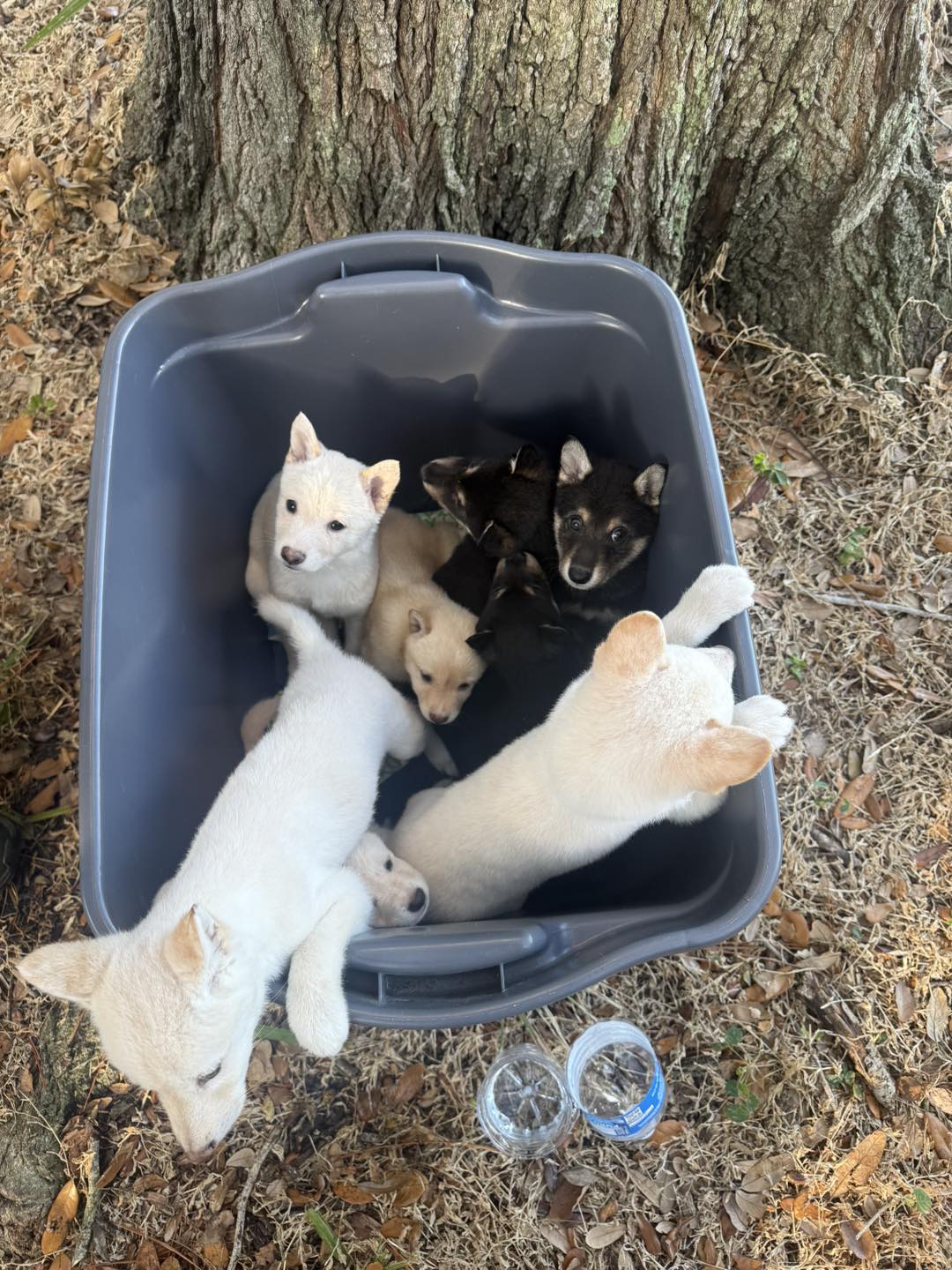
The Taylor Park case involved two adult females and ten puppies — all parvo positive.
Beyond cruelty, this became a community risk event for every dog who uses that park. Parvo spreads through microscopic fecal contamination, and dogs do not need direct contact to become infected. A park is a high-traffic environment, which means the stakes are higher.
Official vaccination records were not released publicly. However, the medical reality of parvovirus allows a responsible conclusion.
The puppies were young and were either unvaccinated or had not completed the DA2PP series (the vaccine series that includes parvo protection). That is exactly the danger window where puppies are most vulnerable.
The two adult females becoming clinically ill and shedding parvo strongly suggests they did not have effective vaccination protection. Properly vaccinated adult dogs are far less likely to develop severe parvovirus illness or shed the virus at levels that drive outbreaks.
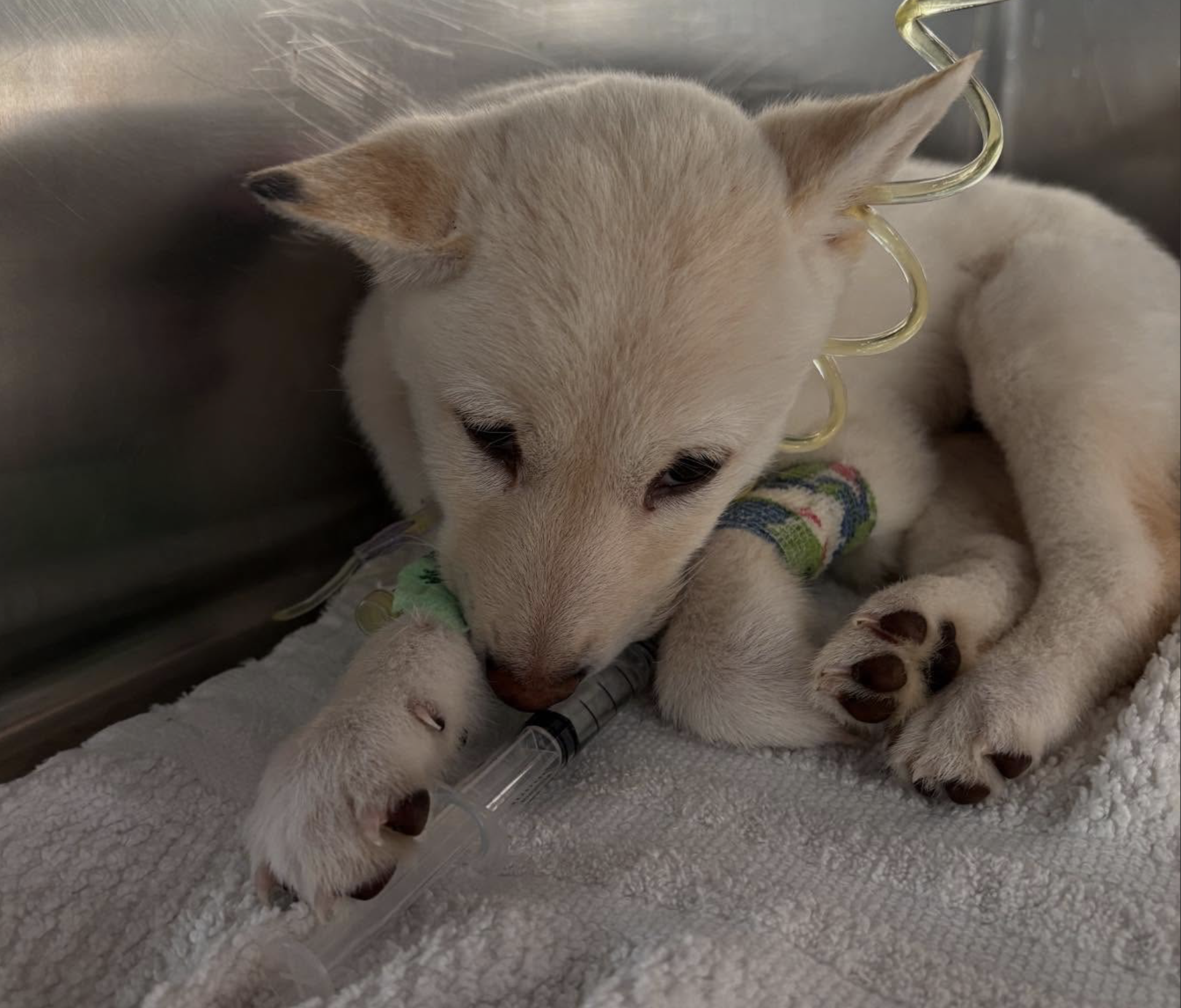
Parvo treatment is intensive: isolation, IV fluids, anti-nausea meds, antibiotics, and round-the-clock monitoring.
People often focus on puppies, but the vaccination status of adult female dogs can change the entire outcome.
Parvo is tough and can persist in the environment for long periods, especially in shaded or damp areas. That means the risk can linger after infected dogs are removed, particularly for unvaccinated puppies and under-vaccinated adolescents.
If you have a puppy who is not fully vaccinated, avoid dog parks, public potty spots, and high-traffic pet areas until the vaccine series is complete. Socialization can be done safely in controlled environments; your veterinarian can help you choose the safest plan.
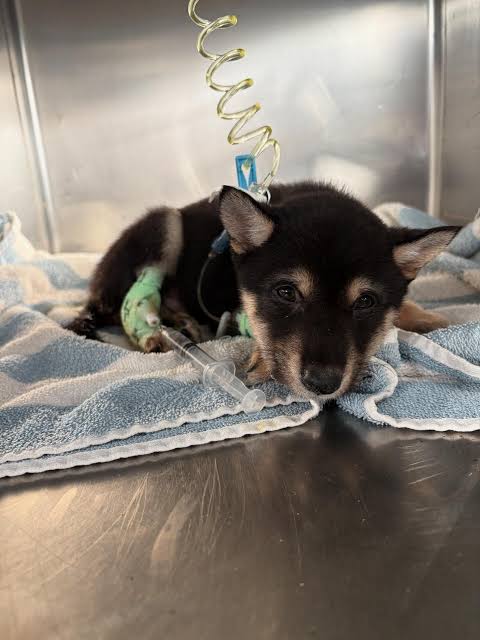
Puppies can look “tired” before they crash. Early vet care saves lives.
This is a practical, mainstream schedule. Your vet may adjust based on local risk, rescue history, and your dog’s health, but these are the anchors.
Bottom line: parvo protection comes from the DA2PP series done on time, through the final puppy booster.
It is possible, but uncommon. Vaccinated dogs are far less likely to develop severe disease. In most cases, vaccination prevents infection or dramatically reduces symptoms and viral shedding.
No. One vaccine does not provide full protection. Puppies are not considered protected until they complete the full DA2PP series and receive their final booster at or after 16 weeks.
Parvo can persist outdoors for months and sometimes longer. If your dog is unvaccinated, under-vaccinated, or immunocompromised, the safest choice is to avoid those areas.
Yes. Humans cannot catch canine parvo, but they can mechanically carry it on shoes, clothing, leashes, or equipment. This is why hygiene matters after visiting high-risk areas.
A properly diluted bleach solution is one of the few household disinfectants known to inactivate parvovirus on hard surfaces. Outdoor soil and grass are much harder to disinfect effectively.
The Taylor Park parvo case was not just a rescue story. It was a preventable community risk event. Vaccines protect individual dogs, protect future puppies, and reduce the chance that public spaces become infection zones.
If you need help finding a low-cost vaccine clinic send a message through our contact form
Written by Shannon, Founder of Shiba Saviors™.